


Kitchen lighting has to do more than make a room look attractive. You need enough light to prepare food safely, see inside cabinets, clean work surfaces, and move comfortably through the room. At the same time, the fixtures should complement the cabinets, countertops, hardware, and overall design.
The best lighting plan usually combines several types of light rather than relying on one central fixture. When planning lighting for kitchens, think about what each area of the room needs and how the lighting will work at different times of day.
Start With the Three Layers of Kitchen Lighting
A well-planned kitchen generally benefits from ambient, task, and accent lighting.
Ambient lighting provides general illumination throughout the room. Recessed fixtures, flush-mount fixtures, or other ceiling lighting can establish the overall brightness.
Task lighting focuses on areas where you perform specific activities. Under-cabinet lighting can illuminate countertops, while strategically placed fixtures can improve visibility around sinks, prep areas, and islands.
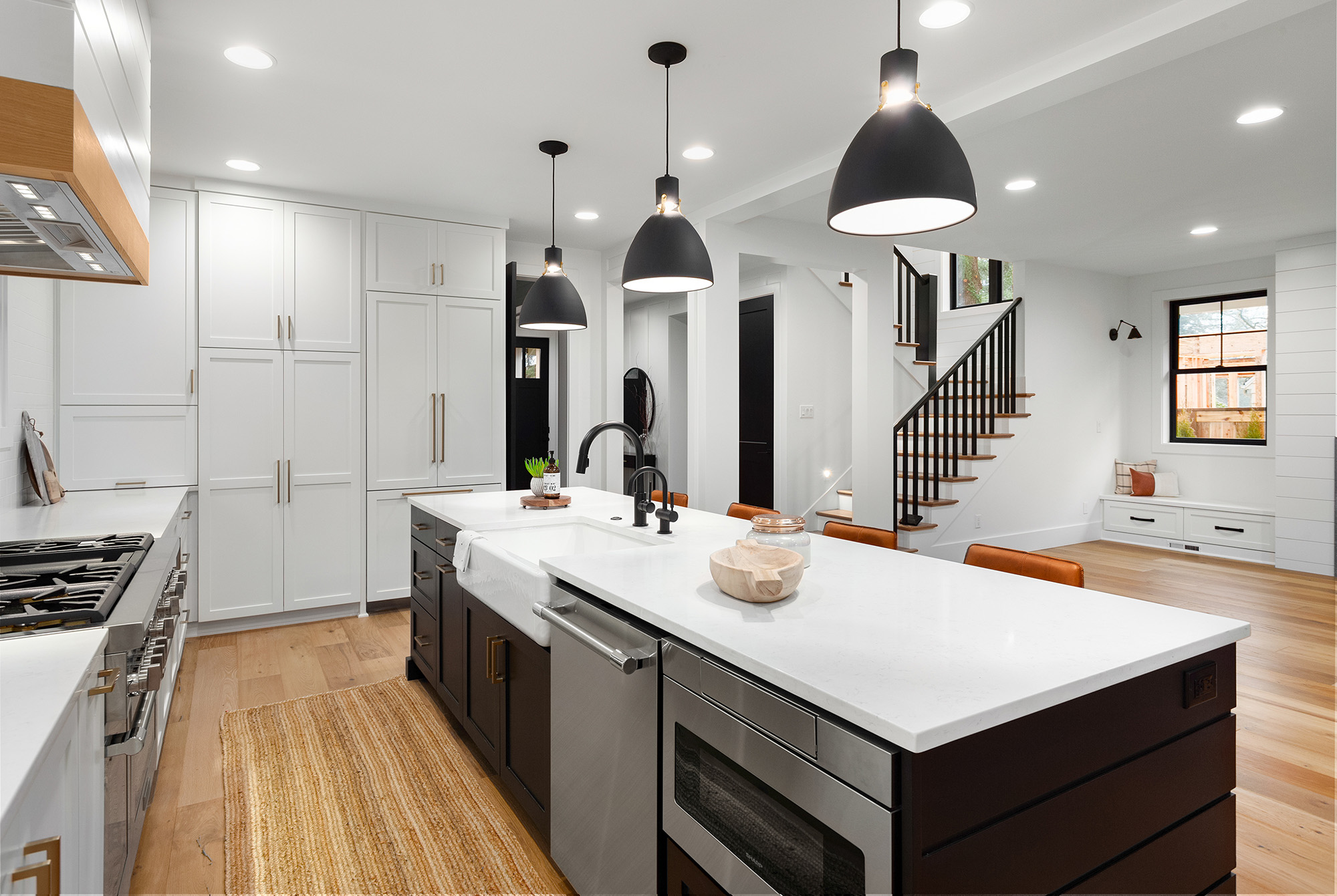
Accent lighting adds visual interest. Decorative pendants over an island, interior cabinet lighting, or strategically placed fixtures can highlight architectural or design features.
The goal is not simply to add more fixtures. It is to make sure each layer has a useful purpose.
Give Countertops and Work Areas Enough Light
Task lighting is especially important around countertops. Overhead lighting can create shadows when you stand between the fixture and the work surface. Under-cabinet lighting helps put illumination directly where you need it and can make food preparation easier. When planning under-cabinet fixtures, consider the location of cabinet bottoms, backsplash materials, outlets, and countertop work areas.
The light should illuminate the counter without creating an uncomfortable glare. Kitchen islands may need their own lighting strategy. Depending on the island's size and purpose, you might use one larger decorative fixture, multiple pendants, recessed lighting, or a combination. The right choice depends on the island's dimensions and how the space is used.
Use Decorative Lighting to Define the Kitchen
Lighting can also help establish the personality of the room. Pendant fixtures can become a focal point over an island. A simple kitchen may benefit from distinctive fixtures, while a highly detailed cabinet design may look better with more restrained lighting. Scale matters.
A fixture that looks appropriately sized in a showroom can appear too small over a large island or too dominant in a compact kitchen. Think about sightlines, too. Fixtures should complement the room when viewed from nearby living or dining areas, particularly in open-concept homes. This is one reason lighting should be selected alongside cabinetry and the overall kitchen layout rather than as a final accessory.
Plan Lighting Before Installation Begins
Lighting installation is much easier to coordinate when it is considered during the design stage. The position of cabinets, appliances, sinks, islands, windows, and doors can all affect where fixtures should go. Electrical locations should be planned before walls are closed or cabinets are installed. Builders Direct Kitchens offers design services that include documenting room dimensions, windows and doors, electrical and utility connections, and appliance locations.
That kind of information can help the overall kitchen plan work together rather than requiring lighting decisions to be made after the major components are already selected. If you are remodeling an existing kitchen, also consider the location of existing switches and electrical connections before committing to a new lighting arrangement.
Make Maintenance Part of Your Lighting Choice
The best lighting should be practical to maintain as well as attractive. Before choosing a fixture, consider how easy it will be to reach, dust, clean, or replace components. Fixtures positioned over high ceilings or difficult-to-access areas may require more effort to maintain. Learning how to clean lighting also depends on the fixture material and manufacturer's instructions.
In general, turn fixtures off and allow them to cool before cleaning, then use the appropriate method for the shade, glass, metal, or other finish. Kitchen fixtures can accumulate grease and dust more quickly than lighting in less active rooms, so accessible designs can make routine maintenance easier.
Use Trends as Inspiration, Not a Blueprint
Lighting trends 2026 can help you discover new fixture shapes, finishes, and ways to layer illumination. But the best lighting is ultimately the lighting that suits your kitchen. Consider the cabinet color, countertop finish, ceiling height, island size, natural light, and how the kitchen is used. Then choose fixtures that support those elements.
Builders Direct Kitchens Fort Lauderdale can help you think through the relationship between cabinetry, layout, and kitchen design before you commit to the final details. Contact us today and visit our showroom to explore ideas that fit your project. For homeowners in Fort Lauderdale, FL and throughout Fort Lauderdale, Oakland Park, Pompano Beach, Boca Raton, and West Palm Beach, FL, thoughtful lighting ideas can help make a kitchen more functional, comfortable, and cohesive.

